
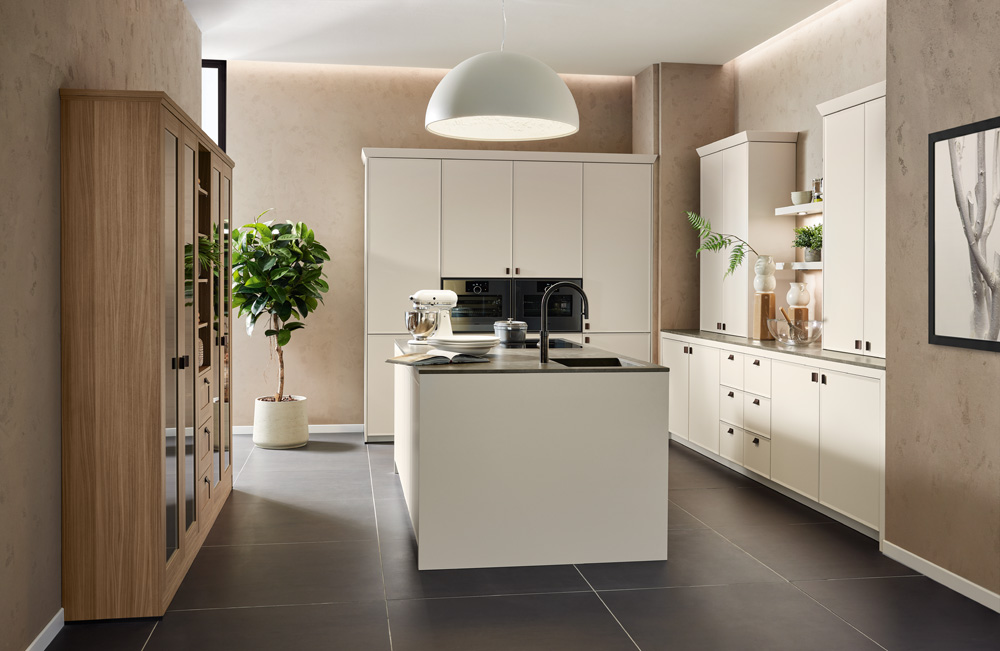
Small kitchens are often seen as a limitation, but in reality they simply demand smarter design.
When space is restricted, every part of the layout needs to work harder. Careful planning can dramatically improve storage, movement and the overall feeling of openness without increasing the physical footprint of the room.
In recent years, many UK homeowners have chosen to optimise their existing kitchen space rather than extend their property. With thoughtful design, even compact kitchens can feel practical, organised and visually spacious.
Below are some of the layout ideas that can make the biggest difference in smaller kitchens.
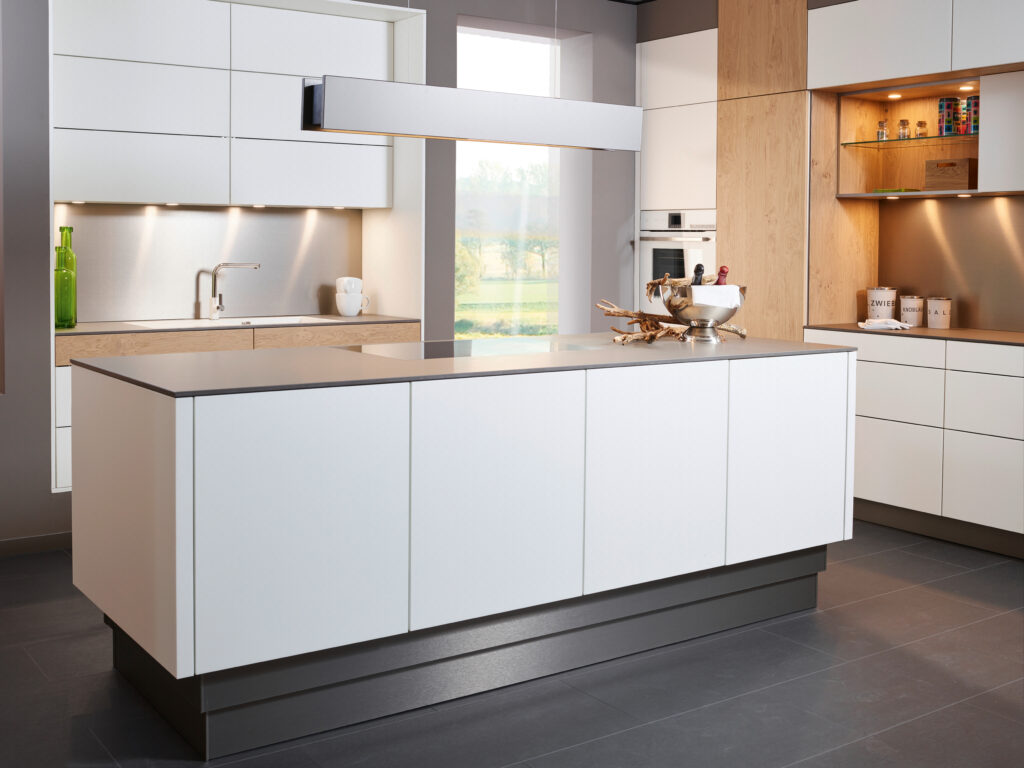
Extending cabinetry all the way to the ceiling is one of the most effective ways to maximise storage in a small kitchen.
Benefits include:
Tall cabinetry also draws the eye upward, which helps the room feel taller and more balanced.
Even if the highest shelves are used only occasionally, the visual impact alone often improves the sense of space.
Appliances play a major role in how efficiently a small kitchen functions.
Slimline or compact appliances can free up valuable space, including:
Integrated appliances are particularly helpful because they maintain consistent cabinet lines, reducing visual interruption and making the kitchen appear larger.
Choosing appliance sizes early in the design process ensures the layout remains efficient.
Traditional hinged doors require clearance space when opened, which can restrict movement in compact kitchens.
Sliding or pocket doors eliminate this problem by removing the need for door swing.
These systems can:
In some homes, sliding doors can even allow the kitchen to be partially closed off when required without losing openness.
Colour has a powerful effect on how large a space feels.
Lighter tones reflect more natural light, helping kitchens feel brighter and more open.
Popular colour choices currently include:
However, a small kitchen does not need to feel plain. Subtle contrast through worktops, splashbacks or textured finishes can introduce interest without visually shrinking the room.
Beyond individual features, the overall layout plays the biggest role in how comfortable a small kitchen feels.
Some of the most effective configurations include:
The key is maintaining a clear workflow between the sink, cooking area and refrigeration.
Overcrowding the space with oversized islands or unnecessary cabinetry can quickly make a small kitchen feel cramped.
Well-designed storage can transform how a compact kitchen functions.
Effective solutions often include:
These systems allow homeowners to store more items while keeping work surfaces clear.
Reducing visible clutter instantly makes the room feel larger and calmer.
The perception of space can often be improved without changing the room’s size.
Some effective strategies include:
These adjustments help create visual continuity and openness.
One of the most common mistakes in small kitchens is trying to include too many features.
In compact spaces, simplicity usually works best.
Avoid:
A restrained approach often produces a cleaner, more comfortable layout.
In some cases, yes. A slim island or peninsula can work if there is sufficient circulation space around it.
Not necessarily. Dark colours can work well when balanced with good lighting and lighter surrounding materials.
Used sparingly, open shelving can add character. Too much, however, can make a kitchen feel cluttered.
Not necessarily. Buyers often prioritise functionality and design quality over size alone.
Yes. Smaller spaces often require more precise planning to maximise storage, workflow and usability.
Small kitchens do not need to feel restrictive. With careful layout planning, intelligent storage and thoughtful material choices, even compact spaces can become highly functional and visually spacious.
When designed well, a small kitchen can feel efficient, organised and inviting — often performing just as effectively as much larger spaces.